Verse 22.
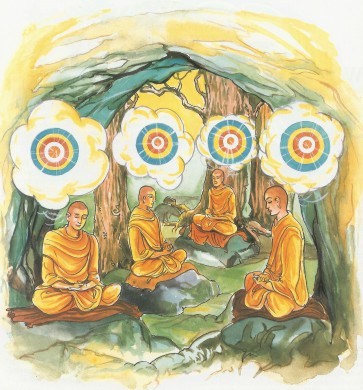
022.
Clearly understanding this excellence of heedfulness, the wise exult therein and enjoy the resort of the Noble Ones.
.
etam visesato natva appamadamhi pandita appamade pamodanti ariyanam gocare rata
.

Verse 22.
022.
Clearly understanding this excellence of heedfulness, the wise exult therein and enjoy the resort of the Noble Ones.
.
etam visesato natva appamadamhi pandita appamade pamodanti ariyanam gocare rata
.
Verse 21.

021.
Heedfulness is the path to the Deathless. Heedlessness is the path to death. The heedful die not. The heedless are as if dead already.
.
appamado amatapadam pamado maccuno padam appamatta na miyanti ye pamatta yatha mata
.
Verse 20.
020.
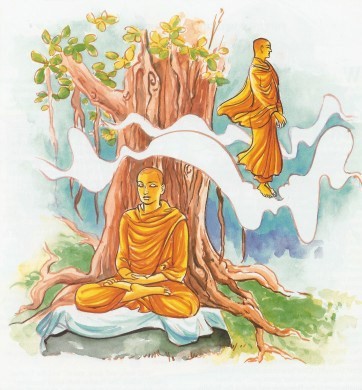
Little though he recites the sacred texts, but puts the Teaching into practice, forsaking lust, hatred, and delusion, with true wisdom and emancipated mind, clinging to nothing of this or any other world — he indeed partakes of the blessings of a holy life.
.
appam pi ce sahitam bhasamano dhammassa hoti anudhammacari ragam ca dosam ca pahaya moham sammappajano suvimuttacitto anupadiyano idha va huram va sa bhagava samaññassa hoti
.
Verse 19.

019.
Much though he recites the sacred texts, but acts not accordingly, that heedless man is like a cowherd who only counts the cows of others — he does not partake of the blessings of the holy life.
.
bahumpi ce sahitam bhasamano na takkaro hoti naro pamatto gopo’va gavo ganayam paresam na bhagava samaññasa hoti
.
Verse 18.

018.
The doer of good delights here and hereafter; he delights in both the worlds. The thought, "Good have I done," delights him, and he delights even more when gone to realms of bliss.
.
idha nandati pecca nandati katapuñño ubhayattha nandati puññam me katan’ti nandati bhiyyo nandati suggatim gato
.
Verse 17.
017.
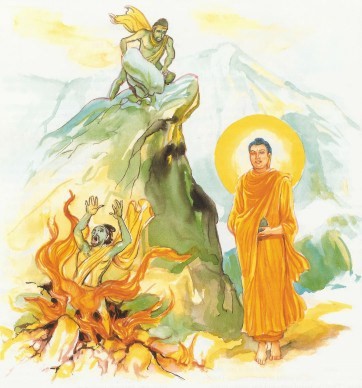
The evil-doer suffers here and hereafter; he suffers in both the worlds. The thought, "Evil have I done," torments him, and he suffers even more when gone to realms of woe.
.
idha tappati pecca tappati papakari ubhayattha tappati papam me katan’ti tappati bhiyyo tappati duggatim gato
.
Verse 16.

016.
The doer of good rejoices here and hereafter; he rejoices in both the worlds. He rejoices and exults, recollecting his own pure deeds.
.
idha modati pecca modati katapuñño ubhayattha modati so modati so pamodati disva kammavisuddhimattano
.
Verse 15.
015.
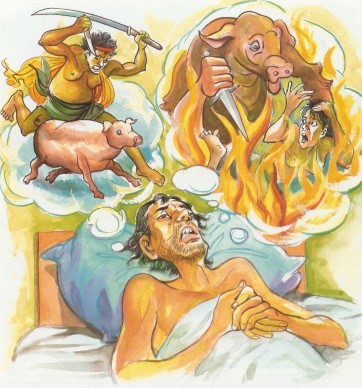
The evil-doer grieves here and hereafter; he grieves in both the worlds. He laments and is afflicted, recollecting his own impure deeds.
.
idha socati pecca socati papakari ubhayattha socati so socati so vihaññati disva kammakilittham attano
.
Verse 14.

014.
Just as rain does not break through a well-thatched house, so passion never penetrates a well-developed mind.
.
yatha garam succhannam vutthi na samativijjhati evam subhavitam cittam rago na samativijjhati
.
Verse 13.
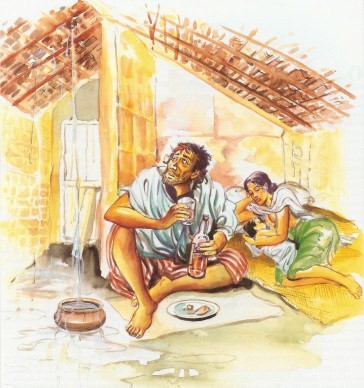
013.
Just as rain breaks through an ill-thatched house, so passion penetrates an undeveloped mind.
.
yatha garam ducchannam vutthi samativijjhati evam abhavitam cittam rago samativijjati
.